Fiverr vs Upwork for Beginners: A Complete Platform Breakdown and Earning Strategy
Wondering whether to launch your freelancing career on Fiverr or Upwork? Discover the core differences, platform fees, and a proven beginner strategy to build your side income today.
Disclosure: This article may contain affiliate links. If you purchase through one of these links, SideCash may earn a commission at no additional cost to you.
Introduction
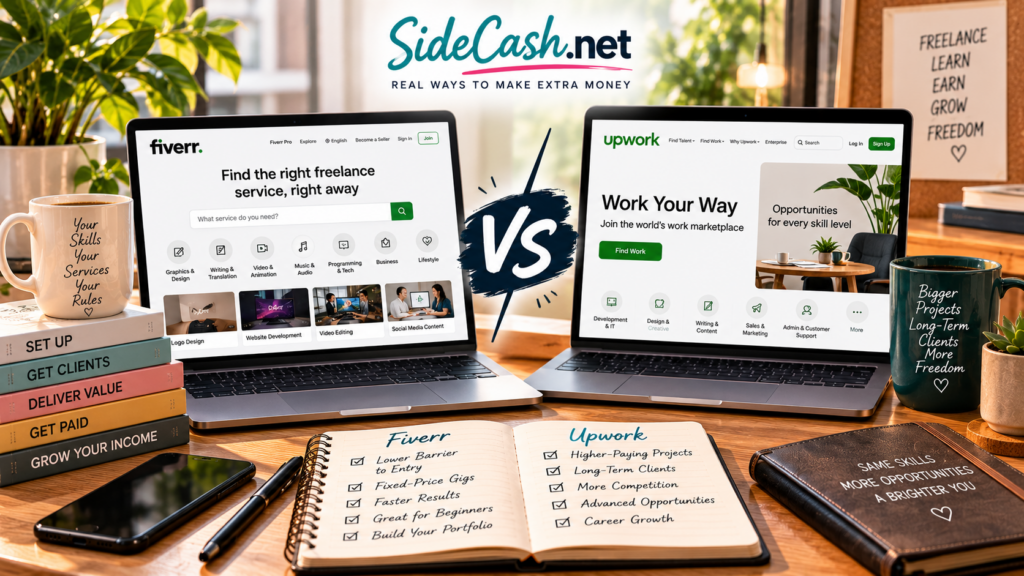
Starting out as a freelancer is pretty overwhelming, especially with so many platforms out there claiming to be the best. If you want to make some extra side cash online, you have probably run into the two biggest giants in the industry: Fiverr and Upwork. Both of these sites have millions of active users and hundreds of thousands of jobs, but they operate in completely different ways. For a complete beginner, picking the wrong one can lead to a lot of wasted time and zero earnings. In this comprehensive guide, we will break down how each platform works, the real costs of freelancing, and a realistic strategy to scale your income this year.
How Fiverr Works: The Gig Model
Fiverr is built around the concept of “gigs,” which are basically service packages that you create and offer to buyers. Instead of searching for jobs, the clients come to you. You set up a shop showing exactly what you can do—like logo design, video editing, or article writing—and choose your pricing tiers.
The biggest advantage for beginners is that you don’t have to spend hours writing custom proposals. Once your gig is optimized with the right keywords, buyers can find you automatically while you sleep. However, the downside is that competition is incredibly fierce. Since anyone can set up a profile, you are competing globally, which often drives prices down. To stand out, having a crystal-clear audio and video presence on your profile is essential. Many successful sellers use a high-quality desktop microphone like the Blue Yeti USB Microphone to record professional, crisp introduction videos that instantly win over client trust.
How Upwork Works: The Bidding System
Upwork takes the exact opposite approach. Instead of waiting for buyers, clients post specific job listings, and you have to apply to them by sending a custom proposal and bidding with digital tokens called “Connects.”
This system is much better if you prefer building long-term relationships with clients who have larger budgets. You get to pitch your specific solution to their problems, which allows you to charge higher hourly rates. The main challenge for beginners is that Upwork gives you a limited amount of free Connects. Once you run out, you have to buy more to keep applying for jobs. If your proposals aren’t high quality, you can quickly lose money before making a single dime.
The Hidden Fees and Platform Costs
Neither of these platforms are completely free. Both Fiverr and Upwork take a significant cut from your hard-earned side income. Fiverr charges a flat 20% commission on every single order you complete, meaning if you sell a $50 gig, you only keep $40. Upwork uses a flat 10% freelancing service fee on your earnings with a client. While Upwork’s fee structure is lower, you still have to factor in the cost of buying Connects to secure those jobs.
A Winning Strategy for New Freelancers
If you want to actually succeed as a beginner, don’t limit yourself to just one platform. Use both to maximize your visibility. Start by setting up three to five highly specific gigs on Fiverr focusing on niche micro-tasks. At the same time, look through Upwork daily and apply only to jobs that match your skills perfectly.
To maintain high productivity while managing multiple clients across both platforms, having an efficient workspace is non-negotiable. Investing in a reliable laptop with excellent multitasking capabilities, such as the Apple 2024 MacBook Air M3 Laptop, ensures you can handle heavy web browsing, communication apps, and creative software seamlessly without frustrating lag.
Conclusion
Ultimately, Fiverr is fantastic for freelancers who want to productize their skills and avoid chasing clients, while Upwork is ideal for those who excel at pitching and want higher-paying, long-term contracts. By understanding the unique mechanics of both, you can position yourself to claim your share of online income.