The Mobile Content Factory: Essential Gear to Produce High-Value Media Anywhere
Elevate your digital media production values without a Hollywood budget. Discover the essential portable recording gear and hardware tools needed to capture crystal-clear audio, eliminate video shake, and produce high-value content anywhere.
The monetization potential for remote content creation has reached an unprecedented scale. Whether you are launching an interview-driven podcast, building automated video marketing campaigns, or recording high-conversion video ads for digital clients, consistency in your technical production value is what separates amateur side ventures from elite online businesses.
However, relying entirely on a standard smartphone mic or a shaky, handheld camera angle inserts a massive quality ceiling over your media assets. Subpar audio and unstable framing trigger rapid viewer drop-offs, directly damaging your conversion rates and digital ad revenues.
To scale an online media business from home or on the road, you must invest in high-yield, compact recording hardware.
By building a portable “mobile studio” setup, digital creators can eliminate room echo, stabilize dynamic camera work, and deliver crisp, broadcast-ready content. This evergreen guide lists the essential portable gear items required to achieve studio-grade output across various recording environments.
1. Capturing Broadcast-Grade Presence with Compact USB Audio
In digital media, audio clarity is vastly more critical than visual aesthetics. Viewers will tolerate a soft or slightly pixelated 1080p video feed, but they will instantly abandon an episode or a marketing tutorial if the voice track is ruined by hollow room reverb or background static.
[Standard Internal Mic] ──► Picks Up Ambient Echo ──► High Viewer Drop-Off Rates
[Dedicated USB Condenser] ──► Isolated Vocal Detail ──► Increased Time-on-Page & Retention
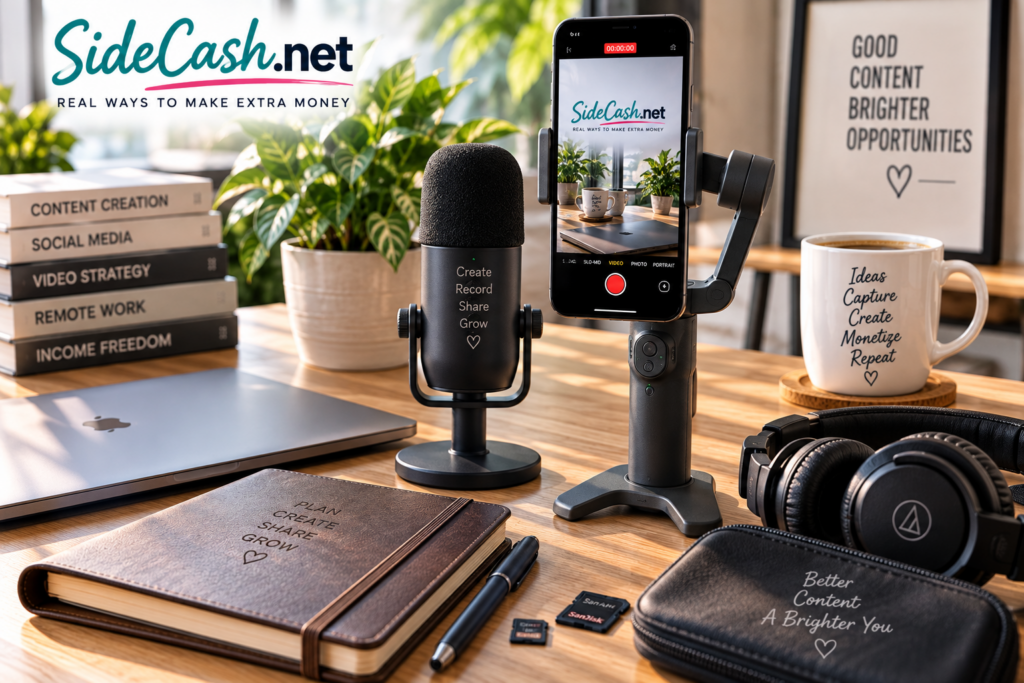
To achieve radio-quality voice presence without investing thousands in acoustic wall treatments, use a dedicated, low-footprint condenser microphone. An excellent solution for desk-based creators is the Blue Yeti Nano USB Microphone.
Equipped with dual custom condenser capsules that capture crystal-clear sound up to 24-bit/48kHz, this plug-and-play device features built-in no-latency headphone monitoring and an onboard mute toggle so you can control your active signal on the fly.
Its tight cardioid pickup pattern isolates your voice while ignoring background room ambiance, making it the ideal foundational asset for recording high-value voiceovers or remote training modules.
2. Eliminating Camera Shaking for High-Velocity Mobile Video
If your content strategy relies on fast-paced, cinematic vertical video for mobile platforms, capturing steady, stabilized motion is a primary operational hurdle. Uncontrolled hand vibrations distract from your messaging and reduce the perceived value of your production.
- Programmatic Motor Stability: Eliminate dynamic axis shake by pairing your phone with a mechanical tracking stabilizer like the DJI Osmo Mobile Smartphone Gimbal.
- Automated Tracking Software: Featuring active 3-axis motor stabilization and built-in extension capabilities, this handheld system uses automated tracking intelligence to lock onto your facial structure dynamically as you present.
This allows lone creators to capture flawless b-roll, fluid walkthrough transitions, and stable talking-head footage without needing an assistant or a full camera crew on site.
3. Structuring a Seamless Post-Production Workflow
Securing high-quality source files is only half the battle; managing a rapid publishing timeline requires a structured editing flow. Once your high-fidelity audio and stable video files are recorded, utilize cloud storage drops to back up your asset folders immediately.
Processing your media through lightweight, AI-assisted video editing software allows you to sync audio layers, overlay captions, and format aspect ratios seamlessly.
By standardizing your recording infrastructure with dependable portable hardware, you minimize editing friction, boost viewer retention metrics, and build a scalable content engine that generates predictable side cash over the long term.