High-Ticket Affiliate Marketing: How Local Service Lead Networks Generate Massive RPL
Move past low-paying retail links. Discover how advanced digital marketers use ping-post API networks to sell high-ticket local service leads for massive payouts.
Disclosure: This article may contain affiliate links. If you make a purchase or complete a qualifying action through one of these links, SideCash may earn a commission at no additional cost to you.
Introduction
When most beginners think about affiliate marketing, they immediately picture promoting low-cost physical items from the Amazon Associates program. While selling books or kitchen gadgets is easy to understand, the commissions are usually tiny—often just a few pennies per click. If you want to build a truly high-earning digital business, you need to shift your focus toward high-ticket affiliate networks. One of the most profitable, under-the-radar methods used by super-affiliates is capturing and selling local service leads through advanced API delivery models.
The Power of Local Lead Generation
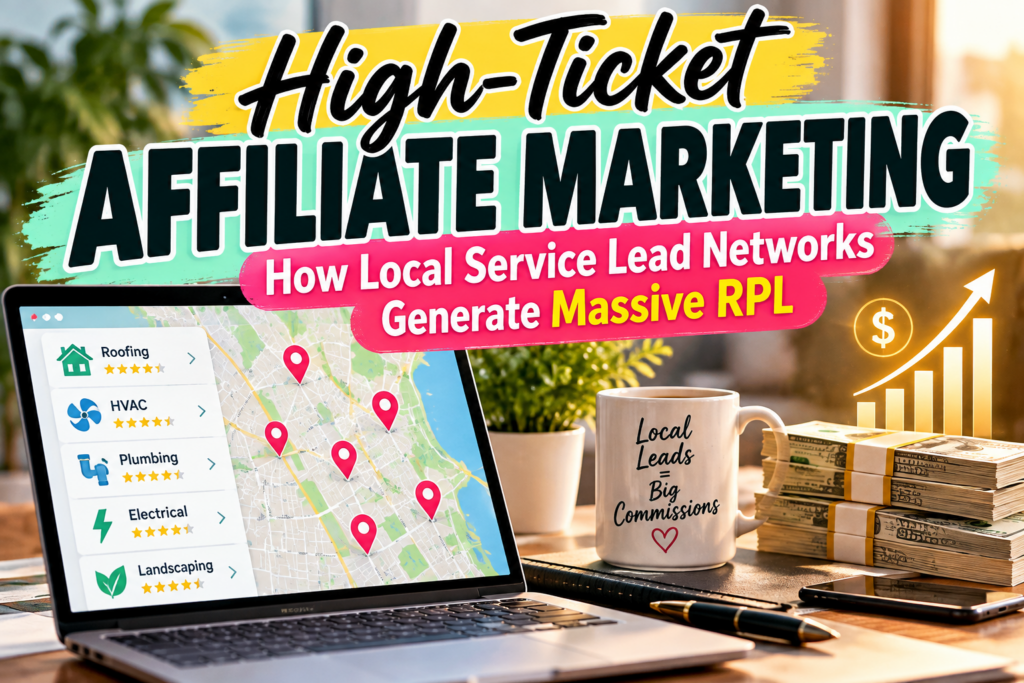
Local lead generation is all about connecting a consumer who needs a high-value service with a local contractor who can actually do the job. Think about industries like roofing, bathroom remodeling, solar panel installation, or HVAC repair. These are multi-thousand-dollar projects, and local businesses are willing to pay massive sums of money just to get the contact details of a qualified homeowner who wants a quote.
Instead of earning a small 3% commission on a physical product, a lead generation affiliate can earn anywhere from $30 to $150 for a single verified web form submission. The homeowner doesn’t even have to buy anything right away; they are simply requesting a free estimate, making it much easier to convert traffic into real side cash.
Understanding the Ping-Post API Model
To maximize your Revenue Per Lead (RPL), professional affiliates use an automated data system known as “Ping-Post.” When a visitor lands on your site and enters their basic geographic data (like their zip code and project type), your site sends a quick partial broadcast—a “ping”—to a marketplace network of multiple buyers.
The buyers’ systems evaluate the data automatically and bid against each other in real-time to purchase the lead. Once the highest bidding buyer is found, your system submits the full contact information—the “post”—and credits your affiliate account instantly. This automated bidding war ensures you always get the absolute highest possible payout for your traffic.
Building a Reliable, Scalable Infrastructure
Because the ping-post model relies on instant, complex API data transmissions, system stability and uptime are absolutely critical. If your local network setup cuts out or suffers from massive processing latency during a bid request, the buyer’s system will reject the data, resulting in a frustrating “No Coverage” error and zero payout for you.
Serious performance marketers keep their operations running perfectly by using robust networking hardware. Running your site management through a stable, high-throughput router like the TP-Link AX1800 WiFi 6 Router (Archer AX21 V5) ensures your local dev tools, server terminals, and database logs communicate flawlessly with affiliate platforms without dropped packets.
Conclusion
Moving into the local service lead vertical is the ultimate way to scale your affiliate earnings. By building targeted informational sites and leveraging automated ping-post marketplaces, you can step away from low-tier physical product links and build a highly lucrative lead generation asset.